

Application is very similar across all types of equipment — whether for vehicles, watercraft, aviation, bicycles (BTT/MTB), 4x4s, industrial machinery, or any other metal‑containing system. Spray it on frames, joints, welds, under covers or panels, around structural areas where corrosion often develops unnoticed, and on hidden or exposed components such as engine parts, radiators, housings, suspension components, wheels, brackets, and metallic assemblies.
Spray all relevant components because ACF‑50 works continuously to prevent corrosion and structural degradation.
Where corrosion is already visible, it will help inhibit its progression by electrically isolating and “switching off” the corrosion cell. It will also penetrate around bolts and fittings, protecting them and preventing seizure.
Exposed parts — such as engines, gearboxes, swingarms, suspensions, metal surfaces, and other vulnerable areas — will benefit from ACF‑50’s thin‑film treatment. After exposure to wet, muddy, salty, or otherwise corrosive environments, equipment will clean up easily and retain a like‑new appearance. It is excellent on black plastic trim and leaves no silicone residue.
It protects electrical joints, connectors, and components by creating high‑resistance barriers that prevent corrosion. This includes PCB boards and electronics such as ignition units, control modules, and multi‑pin connectors. Switches, controls, and levers will also be lubricated and shielded from corrosion. Multi‑pin connectors benefit greatly from ACF‑50 applied directly to the contacts.
What does it actually do?
With regular applications, it simplifies maintenance and saves you money.
It makes equipment easier to clean, keeps it looking new, and helps prevent failures associated with surface, structural, or electrical corrosion — improving reliability and preserving long‑term value.
That is what it truly delivers.
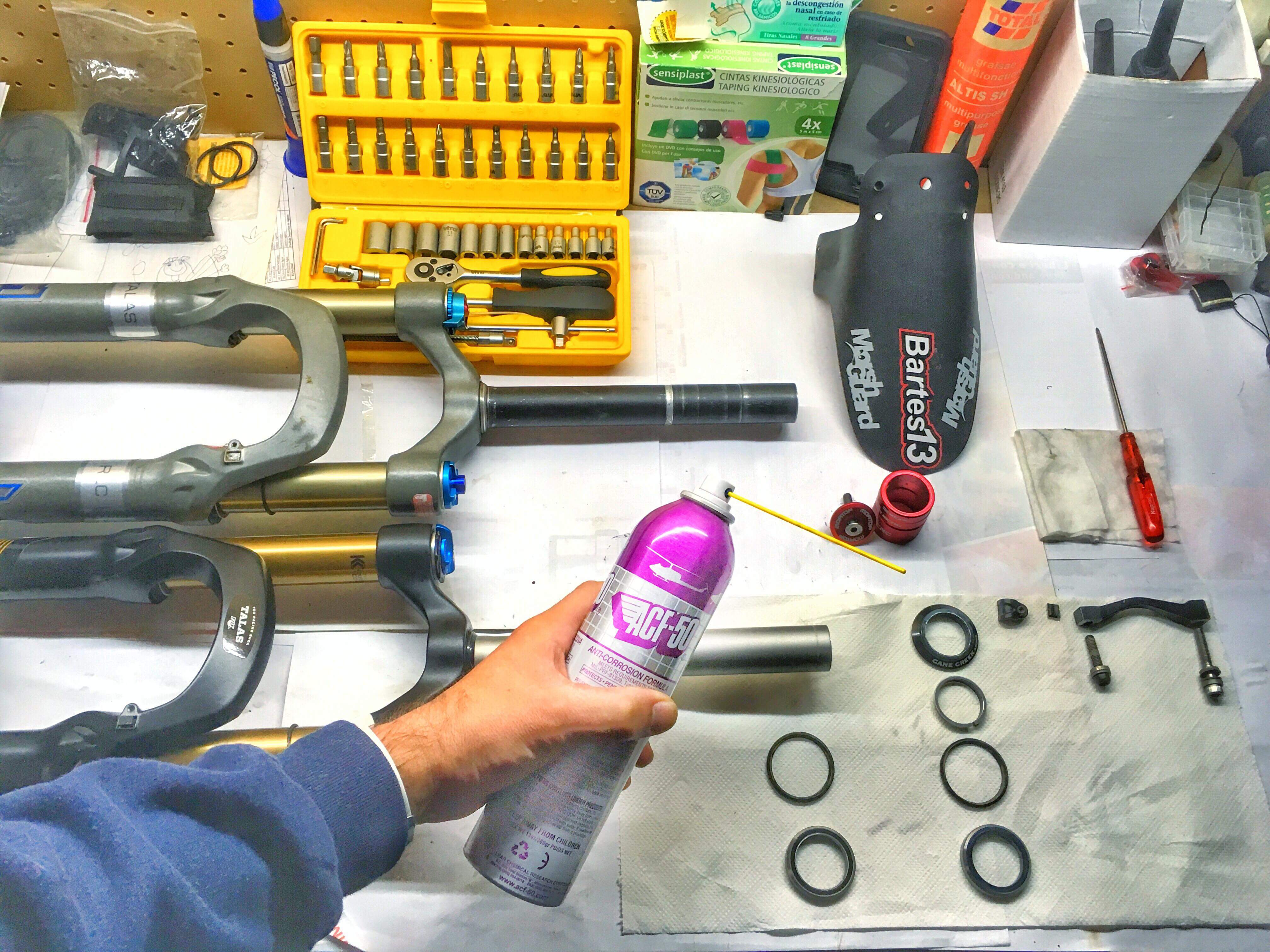
How to use it
Because it was originally designed for aviation, ACF‑50 uses a non‑flammable propellant (when cold, it may spray out with a shaving‑foam‑like texture). Keep the can warm and shake well before use to activate the propellant.
Apply a thin, even coat so that as the fluid creeps, it can reach and cover everything. Be cautious when applying near brake components, as the product can migrate onto pads or discs. For best results, also use a cloth to spread the product; the cloth becomes impregnated and helps distribute it further.
In hidden or sheltered areas, protection lasts up to a year (at least a year on connectors and switches). On exposed components — such as front‑facing parts, wheels, suspension elements, or areas subject to spray — reapply as needed.
ACF‑50 will not harm rubber components, but on very old rubber (40+ years), where natural saturation has occurred, excessive application may cause slight stretching or swelling. Otherwise, it can be used freely without restrictions.